LONG STORY today to tell you about Cassava! Claude and the boys have been working under sweltering HOT conditions ... Harvesting and re-planting Cassava..... So what is Cassava? also known as manioc...tapioka.....brazilian arrowroot.... (you dont eat it?) Think again....   Agriculture has been feeding the world for 20,000 years or more, but in all that time there have only been a handful of crops that have fed the majority of the world's population. We farm and consume vast amounts of these roots, fruits, grains, and pulses. Here on Naciriyawa we have planted a few of these crops.... Potatoes come originally from South America and after first being domesticated around 2500 BC they were transported to Europe in 1536 by the Spanish. The humble potato is the worlds largest food crop following rice, wheat and maize. We tried the crop...were not very successful.....more about this later.... Sweet Potatoes were one of the first crops we planted...remember my kumala post from 2012? Sweet potatoes have been dated back to 8,000 BC in South America. The first Europeans to eat Sweet Potatoes were members of the 1492 Columbus expedition. Sweet Potatoes are roots, unlike Potatoes which are tubers (underground stems). We had good crops...also lost crops to....crabs/rats/ humans....? Yams are a stable food in West Africa and the Caribbean. In North America they are sometimes mistakenly called Sweet Potatoes. Whilst Sweet Potatoes are similar they do not come from the same genus of plants. Originally cultivated in Asia in 8,000 BC, yams are now a staple diet in Africa and the Caribbean.We have planted only a few plants but lost the crop during cyclone Evan. Cassava is a native of South America that is now more commonly associated with Indian and African cooking. Nigeria is the worlds largest producer of Cassava. The tuberous root forms the staple diet to 500 million people. It’s a great source of Carbohydrate and weathers extremely well in drought ridden soils. Tapioca, another name for this food stuff is obtained by drying the root. This plant needs to be well prepared before consumption as it contains a natural form of cyanide.  Cassava is a profoundly vital plant that can take credit for sustaining millions of people (i.e. poor farmers and their families) every day across the tropics and in Africa. Africa produces more than the rest of the world combined for many reasons: it grows well in poor soils, is drought resistant, and can be left in the ground to be harvested when convenient. The South Pacific islanders hardly have a meal without this crop. My own first experience eating cassava dates back to when I visited Madagascar. There it was sold ready to eat much like a baked potato. I thought it was flavorless but tolerable and I ended up eating a lot of it because it was the most accessible food and I started to get withdrawal symptoms for chips....(manioc) as it is known there, makes excellent fries!!!   njammmmm!!!!! Soy-beans are a species of legume that originate from Asia. They were first brought to the US from China by sailors on board a Yankee clipper, using the beans as a cheep source of ballast. We have not planted this yet. Sorghum originated in Egypt between 6,000 and 4,000 years ago. Today sorghum is Africa’s second most important cereal crop. Sorghum (also known as Milo) is a coarse, upright growing grass Plantain a cousin of the banana is a major food crop in equatorial Africa and Andean regions. Plantains are harder and firmer than there sweeter tasting cousins and tend to be used as a savoury component in meals. Most often plantain are prepared as a cooked food stuff and are a very good source of fiber and potassium. Uganda is now the worlds top producer of plantain. Maize or as it is more commonly known, Corn, is a crop that is is almost every food product you purchase in some form or other. Maize was originally cultivated in the prehistoric era by indigenous tribes of what we now refer to as Central America. Maize was brought to Europe in the late 1400′s. Wheat is the worlds most farmed crop by surface area. Wheat is perhaps associated with farming more than any other crop, it is quite literally our daily bread. The cultivation of wheat for crops was first thought to be in an area that is now modern day Iraq in the Tigris river valley. Rice is the stable of any Asian diet, and is grown on every continent, with the exception of Antarctica. Rice feeds half of the worlds population and is the second most important world crop after maize. But today, my post is about Cassava....and I have to tell you about us being actually Claude and Sai and helpers harvesting and re-planting this crop.... 
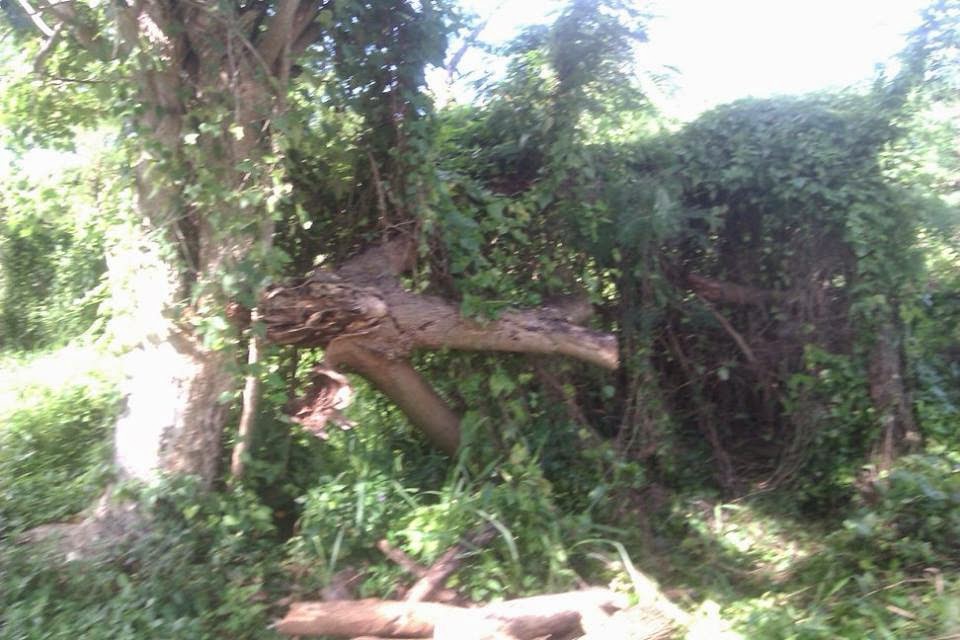
This is the plant....
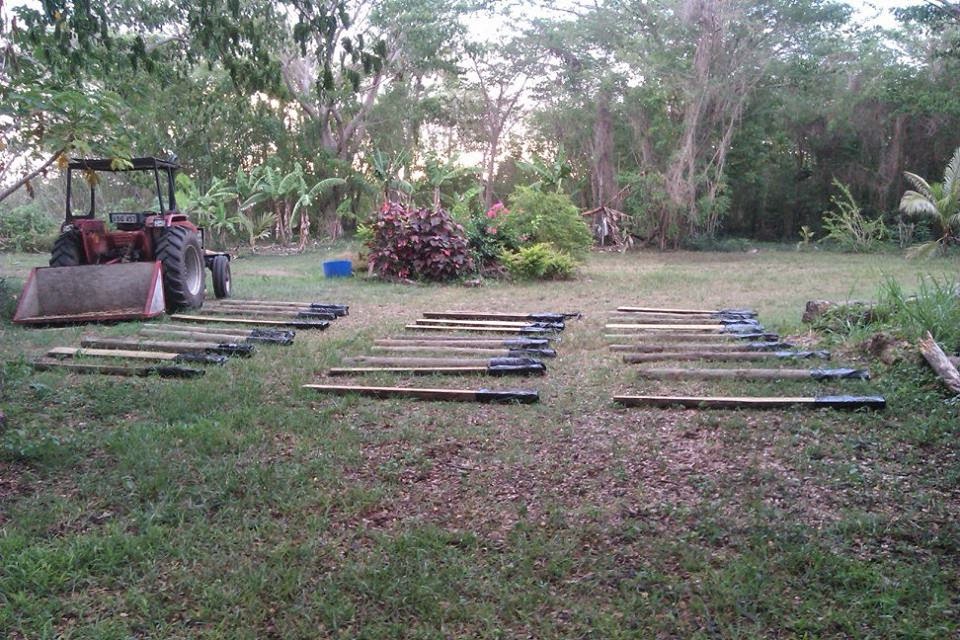
This is part of the field where we are harvesting today......
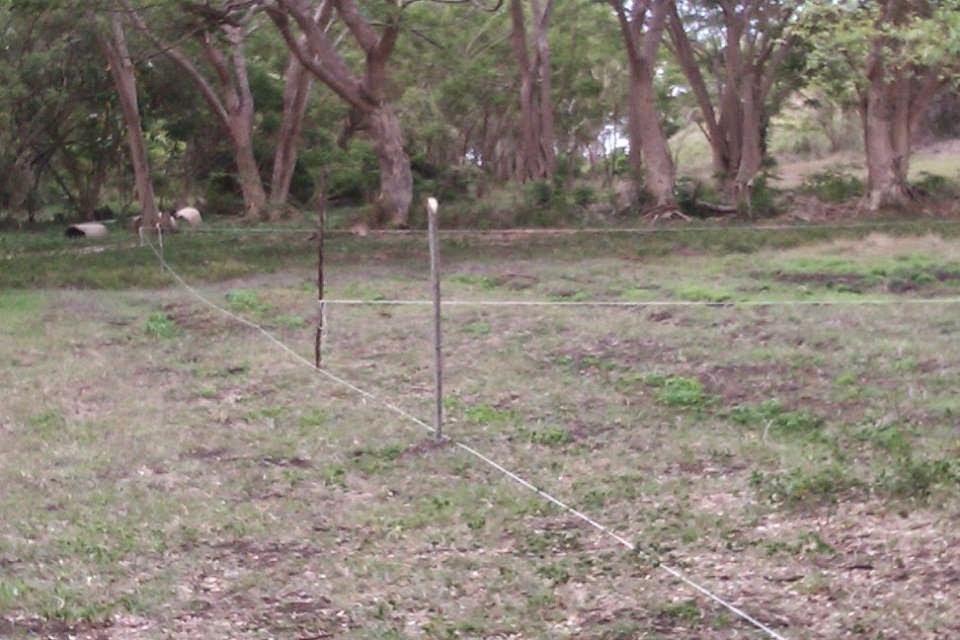
We are in a el Nino cycle, which means that there will be less rain - a basically drought situation. very difficult to have a planting programme...always waiting for rains........
It was predicted that our rains might come by the end of January/February....so we are hoping that our planting will not be in vain !
  The Cassava plant ......     a cross cut through the root......     job nearly done.....thanx guys!
remember the 21st of Jennifer? Here is a recipe similar to her cassava cake.....

Cassava Cake
|

 |
Submitted By: lola
Photo By: Damian Plaza
|

"This dessert is made with fresh cassava root (yucca) and coconut milk."
Ingredients:
2 cups grated, peeled yucca
2 eggs, beaten
1 (12 ounce) can evaporated milk
|
1 (14 ounce) can sweetened condensed
milk
1 (14 ounce) can coconut milk
|
Directions:
| 1. | Preheat an oven to 350 degrees F (175 degrees C). |
| 2. | Stir the yucca, eggs, evaporated milk, sweetened condensed milk, and coconut milk together in a bowl until thoroughly combined; pour into a baking dish. |
| 3. | Bake in the preheated oven for 1 hour. Switch the oven's broiler on and bake under the broiler until the top of the cake is browned, 2 to 3 minutes. Cool completely in refrigerator before serving. |
| ALL RIGHTS RESERVED © 2015 Allrecipes.com |