Showing posts with label naciriyawa. Show all posts

Tuesday, July 3, 2012

Fiji and our farm from above!


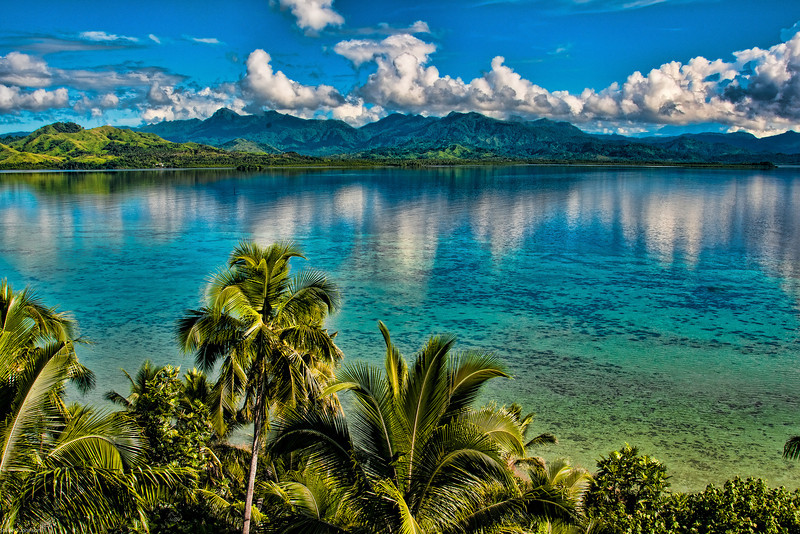
The view  - oooo the view  !!!


Julia from Germany ,  
                                   our first helper from helpx on the farm . 
                                                      Her second day on the farm started with an adventure!


a Friend, Doug King - from LITEFLITEGREEN ,  offered the girls a fly over our area and needless to say -

the girls jumped at this opportunity!

It was a glorious day and Claude and I were enviously watching them from the land!


the beautiful Nakorokoro reef and lighthouse....just around the corner from Naciriyawa.


Our catamaran in the fore with a view of Nadi Bay in the background.


Prrrfection moored in the inlet


Rochelle loved this flying...
                                        Doug, she might just be a trainee!

 Stoked...yoohoo!!


I do not have words to describe all of this.....


Vuda Marina is about 1.5 km from the farm.


Mariska,
                    a bit apprehensive at first,
                                                                   was all smiles afterwards!


Vuda marina and First Landing in the fore......
                                                                      note the foot shaped island...(man made)


Dreketi from the air....................


and this is the plane.....

www.liteflitegreen.com

it is a foxbat, light sports aircraft. 
                                                 It is available for hire and for sale  in Fiji 
                                                                                             and Doug also gives training.....


Thanx Doug , the girls had a GREAT time!

Thursday, November 3, 2011

Bula Fiji


Bula, like the Italian prego or the Spanish ola, is a word in the Fijian language that is most widely used and has  a variety of meanings, each of which depend on the given the situation. The word (pronounced as boolah) literally means “life” and is most commonly used as a greeting, meaning “hello!”

Using bula in this way is to express wishes for one’s good health; the full saying is “Ni sa bula vinaka,” (pronounced as nee-sahm-bula-veenaka) which equates to “wishing you happiness and good health.”

An appropriate response to bula in this context is “Bula vinaka.” The word is also used as a blessing when someone sneezes.


                         Listen to this... and get into the Fijian spirit....


At many resorts you will be greeted on arrival by the Fijian song - 'Bula Malaya' - a joyous song of welcome, which ends with an emphatic "BULA!" at the ending.


see more of these beautiful photos - www.karmajunglephotos.com


Mirëdita (to our Albanian friends)

 Ahalan (to our Arabic speaking friends) 

Parev (to our Armenian friends)
 Zdravei / Zdrasti (to our Bulgarian friends)  

 Nei Ho (to our Cantonese speaking Chinese friends) 

Dobrý den / Ahoj (to our Czech friends) 

Goddag (to our Danish friends) 

Goede dag, Hallo (to our Dutch friends) 

Hello (to our English friends) 

Saluton (to our Esperanto speaking friends) 

Hei (to our Finnish friends) 

Bonjour (to our French friends) 

Guten Tag (to our German friends) 

 Gia'sou (to our Greek friends)
 
Aloha (to our Hawaiian friends)
 
 Shalom (to our Hebrew speaking friends) 

 Namaste (to our Hindi speaking friends) 

Jó napot (to our Hungarian friends) 

Halló / Góðan daginn (to our Icelandic friends) 

Halo (to our Indonesian friends) 

Aksunai / Qanuipit? (to our Inuit friends) 

Dia dhuit (to our Irish friends) 

Salve / Ciao (to our Italian friends) 

 Kon-nichiwa (to our Japanese friends)

 An-nyong Ha-se-yo (to our Korean friends)
 
Salve / Salvëte (to our Latin speaking ancient Roman friends)

Ni hao (to our Mandarin speaking Chinese friends) 

Kiaora (to our Maori friends)
Hallo (to our Norwegian friends)

Dzien' dobry (to our Polish friends)
 
Olá (to our Portuguese friends)
 
Bunã ziua (to our Romanian friends)

 Zdravstvuyte (to our Russian friends)

Hola (to our Spanish speaking friends)

Jambo / Hujambo (to our Swahili friends)

Hej (to our Swedish friends)

Iaorana (to our Tahitian friends)

 Sa-wat-dee (to our Thai friends)

Merhaba / Selam (to our Turkish friends)

 Vitayu (to our Ukrainian friends)

Xin chào (to our Vietnamese friends)

Hylo; Sut Mae? (to our Welsh friends)

 Sholem Aleychem (to our Yiddish speaking friends) 

Sawubona (to our Zulu speaking friends) 


want to add a greeting?


Naciriyawa.....the meaning of the name

What does NACIRIYAWA mean.......?

The origins of the first people of Fiji cannot be pinpointed exactly  as there are no written records and oral legends and memories the only source of their history ...
According to these storytellers the epic journeys of Fiji's ancestors began around 1500 BC with a voyage of giant war canoes from Thebes and traveled up the Nile to Tanganyika ("fish bag" in Fijian), eventually migrating from Africa to Fiji.
Interestingly, one of the largest coastal river systems in Tanganyika (now Tanzania) is the Rufiji .


The purpose of the expedition was to find a mythological island in the South East with bountiful seas and rich land created by the Gods where the Chief’s people could rest after years of wandering. Navigation was by the stars. The armada carried rations, families, warriors and skilled craftsmen including Lapita potters.

Two convoys set sail, but one got separated and disappeared in the Indian Ocean. The other continued South East past Indonesia, Papua New Guinea into the Marquesas, north of Tahiti, then curled back south west into the Fiji group of islands. Legend has it that the armada traveled via the Yasawas and as the reefs were treacherous around Viti Levu, they had to keep traveling South West to find a passage to enter Fiji Waters. This was Momi passage, which is still used today by large ocean-going vessels.

Leading the armada on a giant double hull canoe called "Kaunitoni" was the warrior Chief Lutunasobasoba  assisted by his General Degei.


Legend has it that the armada was carrying some special cargo - treasures from the Temple of King Solomon in Judah which included a special box called the Katonimana ("Kato" meaning case and "Mana" being magic), which in Fijian literally means "Box of Blessings".
Due to rough weather, the "Katonimana" - the “Box of Blessings” slipped off the outrigger canoe in the waters surrounding Mana Island in the Mamanuca Group near the west coast of Viti Levu Island, Fiji.  Lutunasobasoba gave orders to let it go, believing it was the will of the gods. ( It has never been found...)

After damaging the hull on a coral reef, the convoy finally landed at Vuda Point, a beach on the big Island Viti Levu. They explored the surrounding land and the chief ordered two of his daughters to build a house and they called the house that they built

 "Naciriyawa", which means - far drifted.....


When we heard this fable, we immediately loved the name and decided to call our farm


                                                         Naciriyawa,    

 as we also drifted far.....

                                           from Africa...


                                                                     on our catamaran Prrrfection....


read about our voyage here - www.sailblogs.com/member/prrrfection


                             and the  shape of our land has the outline of the African continent......

Naciriyawa...far drifted......


Could they possibly have landed here...?    this is the only protected estuary on the west coast where they were suppose to have landed  ......................it makes sense to choose a protected estuary to make landfall.....            
                          Did they maybe build their  first house on this land before moving further inland? ............


http://www.fijiguide.com/ - lovely site with more photos
http://www.fijime.com/ - Fiji tourism site